News | September 12, 2024

INTERVIEW. 2011 24H BARCELONA. Enter CREVENTIC!

A retrospective look at the 2011 Hankook 24H BARCELONA, the first edition organized by CREVENTIC.
Words - James Gent , Images - Eric Teeken
share this content on:

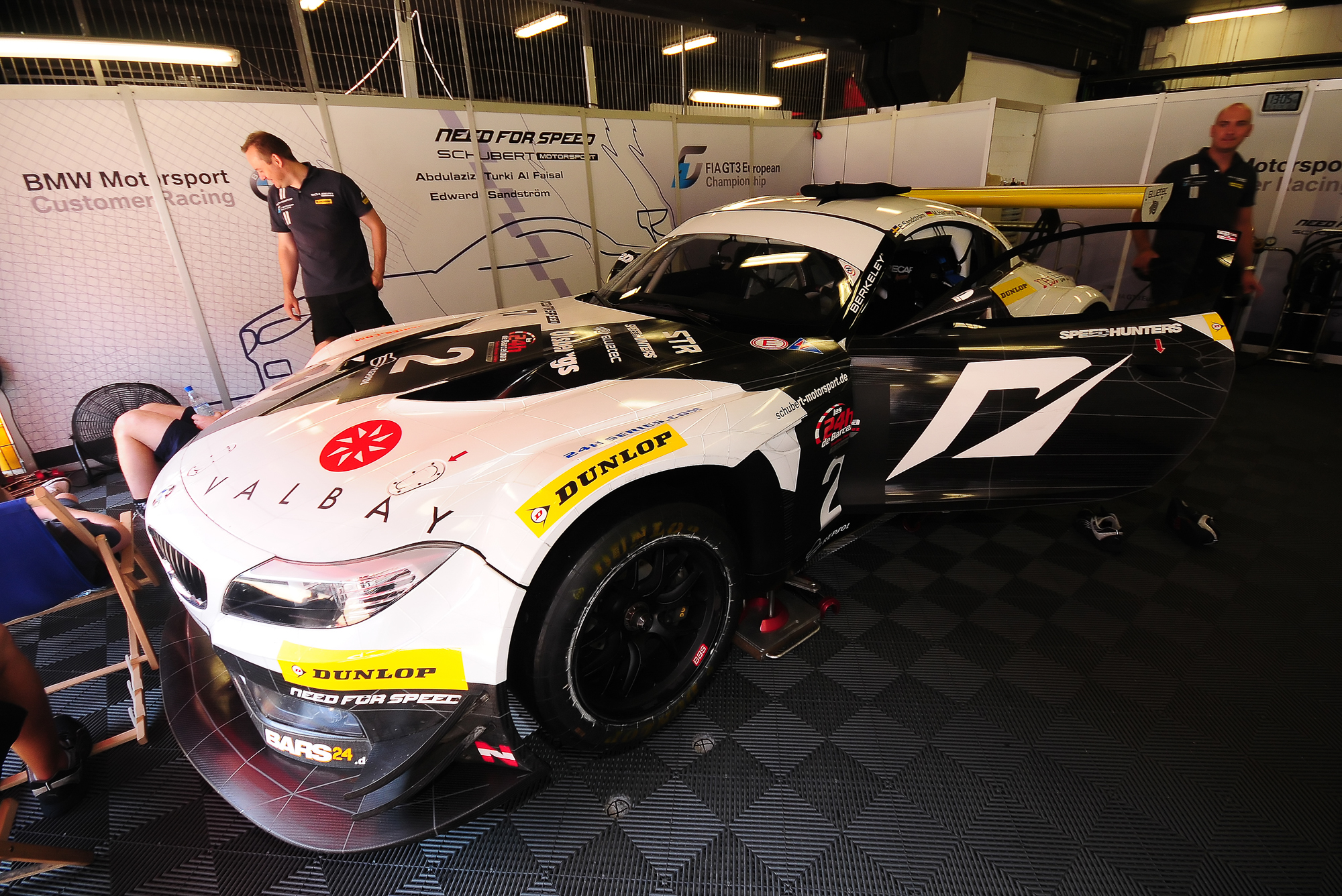
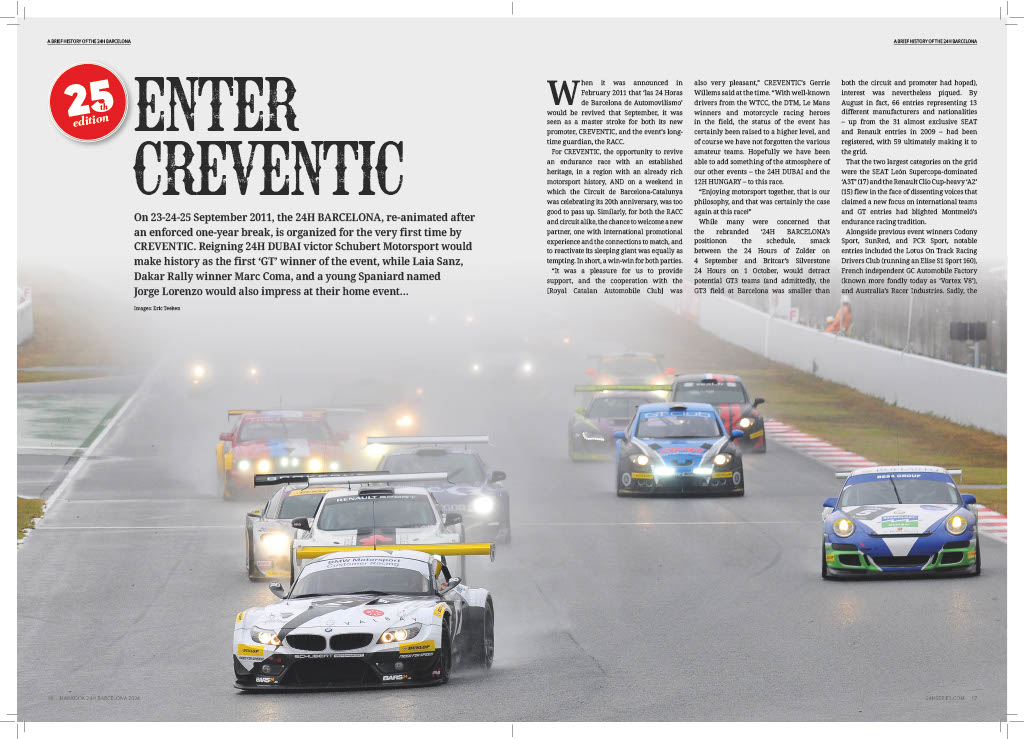
On 23-24-25 September 2011, the 24H BARCELONA, re-animated after an enforced one-year hiatus, is organized for the very first time by CREVENTIC. Reigning 24H DUBAI victor Schubert Motorsport would make history as the first ‘GT’ winner of the event, while Laia Sanz, Dakar Rally winner Marc Coma, and a young Spaniard by the name of Jorge Lorenzo would also impress at their home event… 

When it was announced in February 2011 that ‘las 24 Horas de Barcelona de Automovilismo’ would be revived that September, it was seen as a master stroke for both its new promoter, CREVENTIC, and the event’s long-time guardian, the RACC.   


For CREVENTIC, the opportunity to revive an endurance race with an established heritage, in a region with an already rich motorsport history, AND on a weekend in which the Circuit de Barcelona-Catalunya was celebrating its 10th anniversary, was too good to pass up. Similarly, for both the RACC and the circuit, the chance to welcome a new partner, one with international promotional experience and the connections to match, to reactivate its sleeping giant was equally as tempting. In short, a win-win for both parties. 


“It was a pleasure for us to provide support, and the cooperation with the [Royal Catalan Automobile Club] was also very pleasant,” CREVENTIC’s Gerrie Willems said at the time. “With well-known drivers from the WTCC, the DTM, Le Mans winners and motorcycle racing heroes in the field, the status of the event has certainly been raised to a higher level, and of course we have not forgotten the various amateur teams. Hopefully we have been able to add something of the atmosphere of our other events – the 24H DUBAI and the 12H HUNGARY – to this race.


“Enjoying motorsport together, that is our philosophy, and that was certainly the case again at this race!”

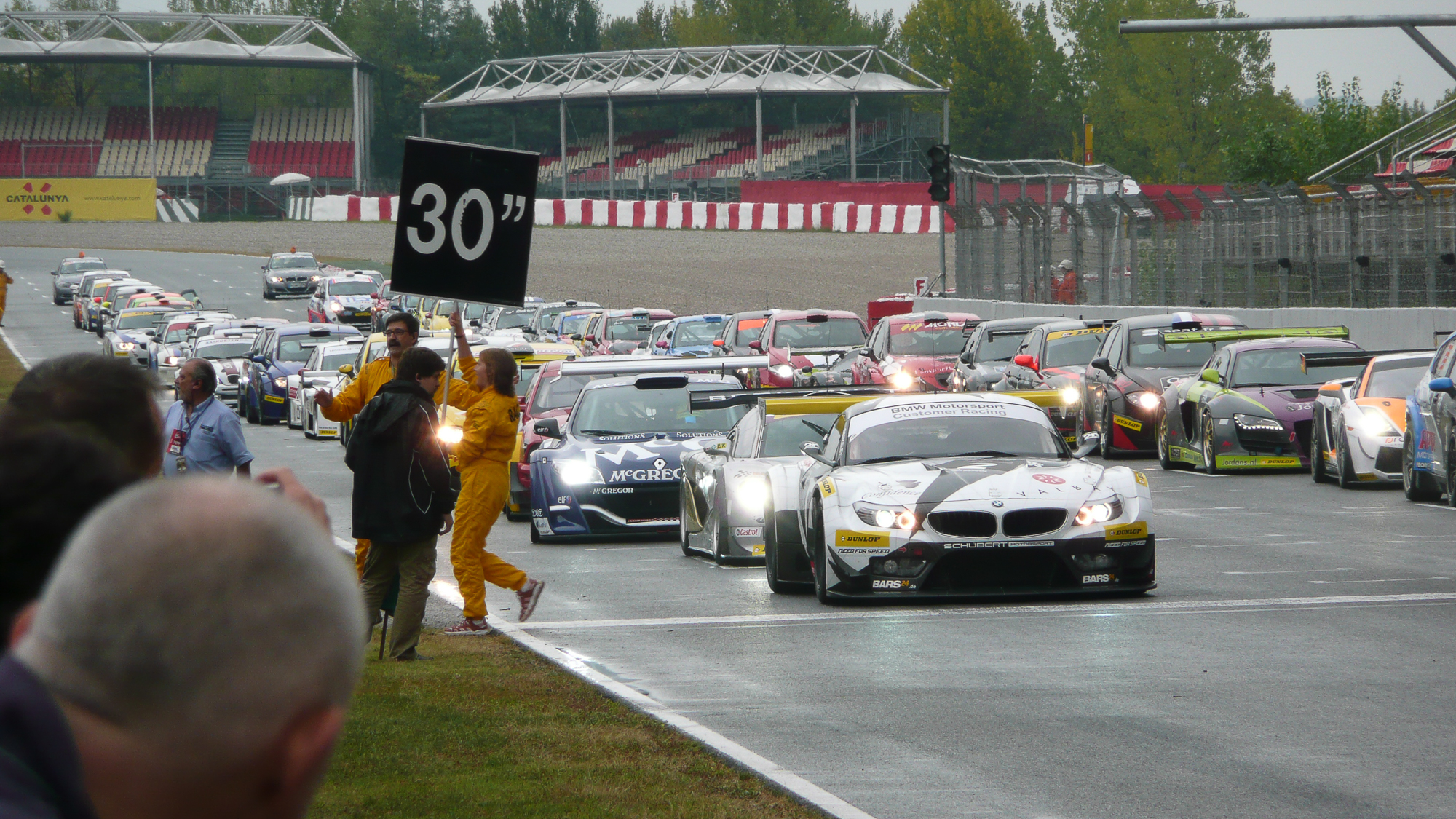
While many were concerned that the rebranded ‘24H BARCELONA’s position schedule, smack between the 24 Hours of Zolder on 4 September and Britcar’s Silverstone 24 Hours on 1 October, would detract potential GT3 teams – and admittedly, the GT3 field at Barcelona was smaller than both the circuit and promoter had hoped – interest was nevertheless piqued. By August in fact, 66 entries representing 13 different manufacturers and nationalities – up from the 31, almost exclusive SEAT and Renault entries in 2009 – had been registered, with 59 ultimately making it to the grid. 


That the two largest categories on the grid were the SEAT León Supercopa-dominated ‘A3T’ (17) and the Renault Clio Cup-heavy ‘A2’ (15) flew in the face of dissenting voices that claimed a new focus on international teams and GT entries had blighted Montmeló’s endurance racing tradition. 


Alongside previous event winners Codony Sport, SunRed, and PCR Sport, notable entries included the Lotus On Track Racing Drivers Club (running an Elise S1 Sport 160), French independent GC Automobile Factory (known more fondly today as ‘Vortex V8’), and Australia’s Racer Industries, though unfortunately, an overheated engine eliminated the Holden Astra VX-R shortly before half-distance. 


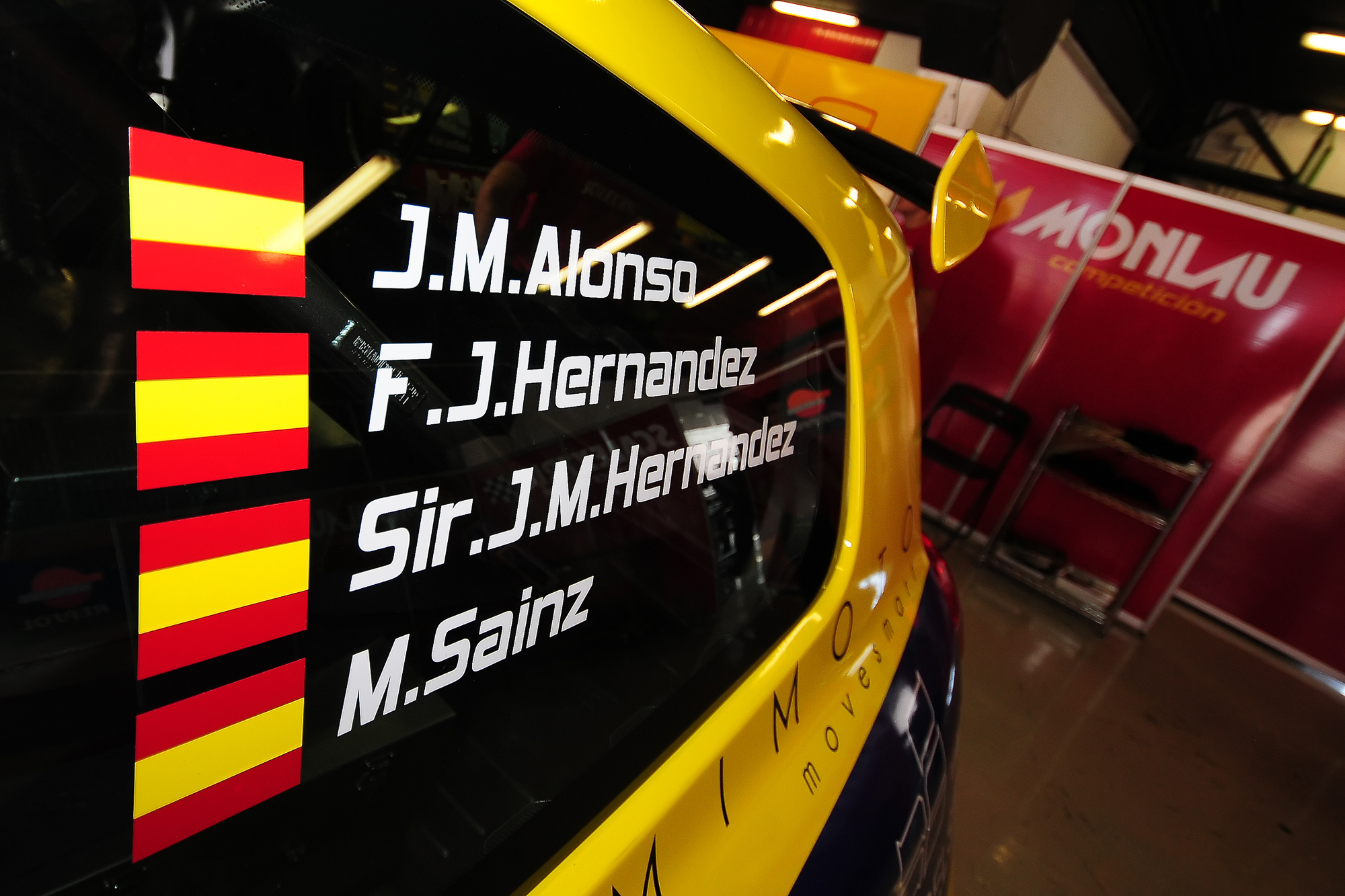
Local boys Monlau Competición, a future overall podium finisher and class winner at the 24H BARCELONA, brought three entries to its home event. One of which, interestingly, featured then-three-time (now five-time) Dakar Rally winner Marc Coma alongside Miguel Labaraias, Aitor Gonzalez and Carlos Victor Yague, the three winners of the ‘Objectiu 24 Hores’ competition, championed by TV3’s ‘Motor a Fons’ television program and the Circuito Escuela Fast Parcmotor. 


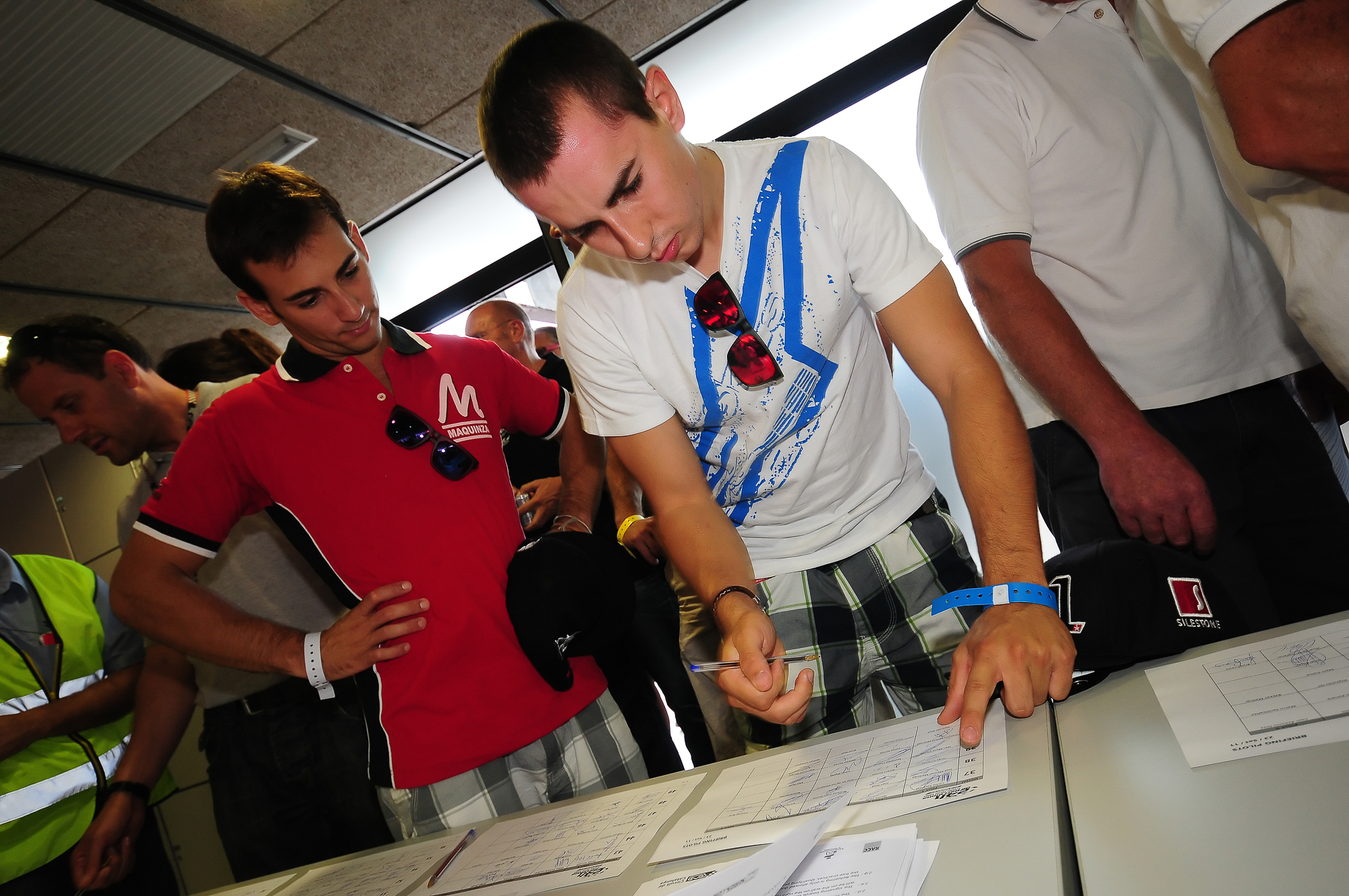
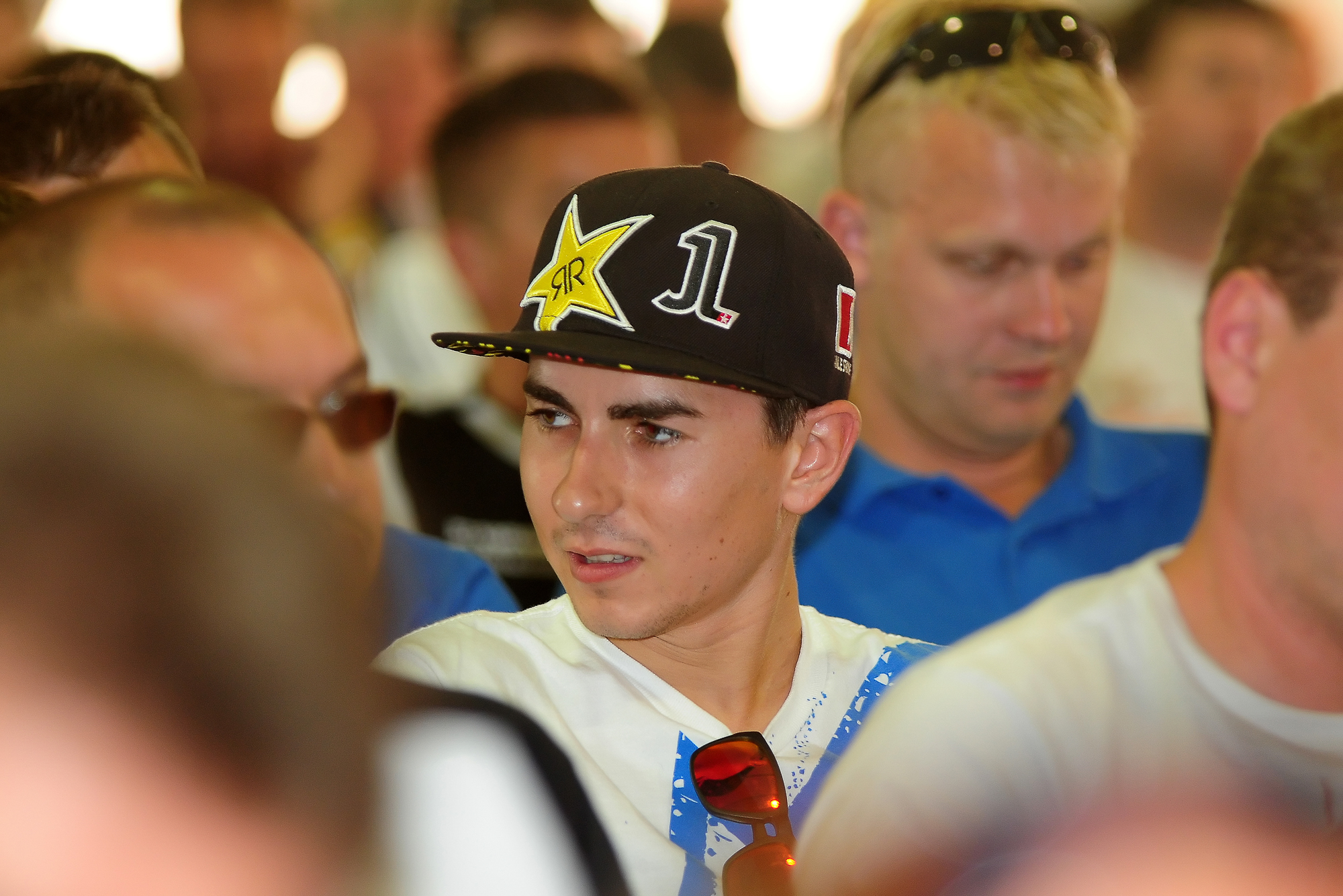
Far from the only high-profile name, Coma was joined on the grid by future Dakar Rally alumnus – and Women's Trial World Championship legend – Laia Sanz, who raced alongside two-time event winners Enric and Jordi Codony (’01 and ’02) and Francesc Gutierrez (’98 and ’08) at Codony Sport. Jorge Lorenzo, then reigning (and future three-time) MotoGP World Champion, was the high-profile addition to PCR Sport’s line-up – one year on from the Yamaha factory rider’s four-wheel endurance debut at the 500km of Alcañiz – alongside Alvaro Fontes, Jose Manuel de los Milagros Vińegla, and Ricky Cardús, the latter halfway through only his second season in Moto2. 


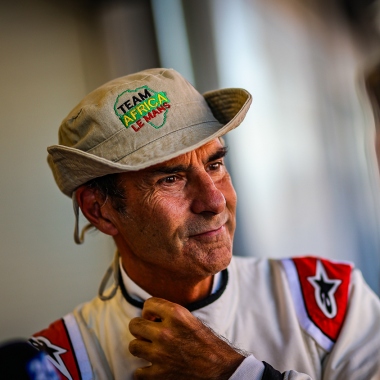
Even two outright Le Mans winners – the late Jean-Pierre Jaussaud (‘78 and ‘80), and Jan Lammers (’88) – lined up with Auto Sport GP and BvV Racing respectively. While Jaussaud’s Renault Clio III RS Cup came home 7th in A2, electrical gremlins eliminated Lammers’ BMW 120d after only a few hours. Fingers crossed the Dutchman can avenge this result on his 2024 return with Team Africa Le Mans.

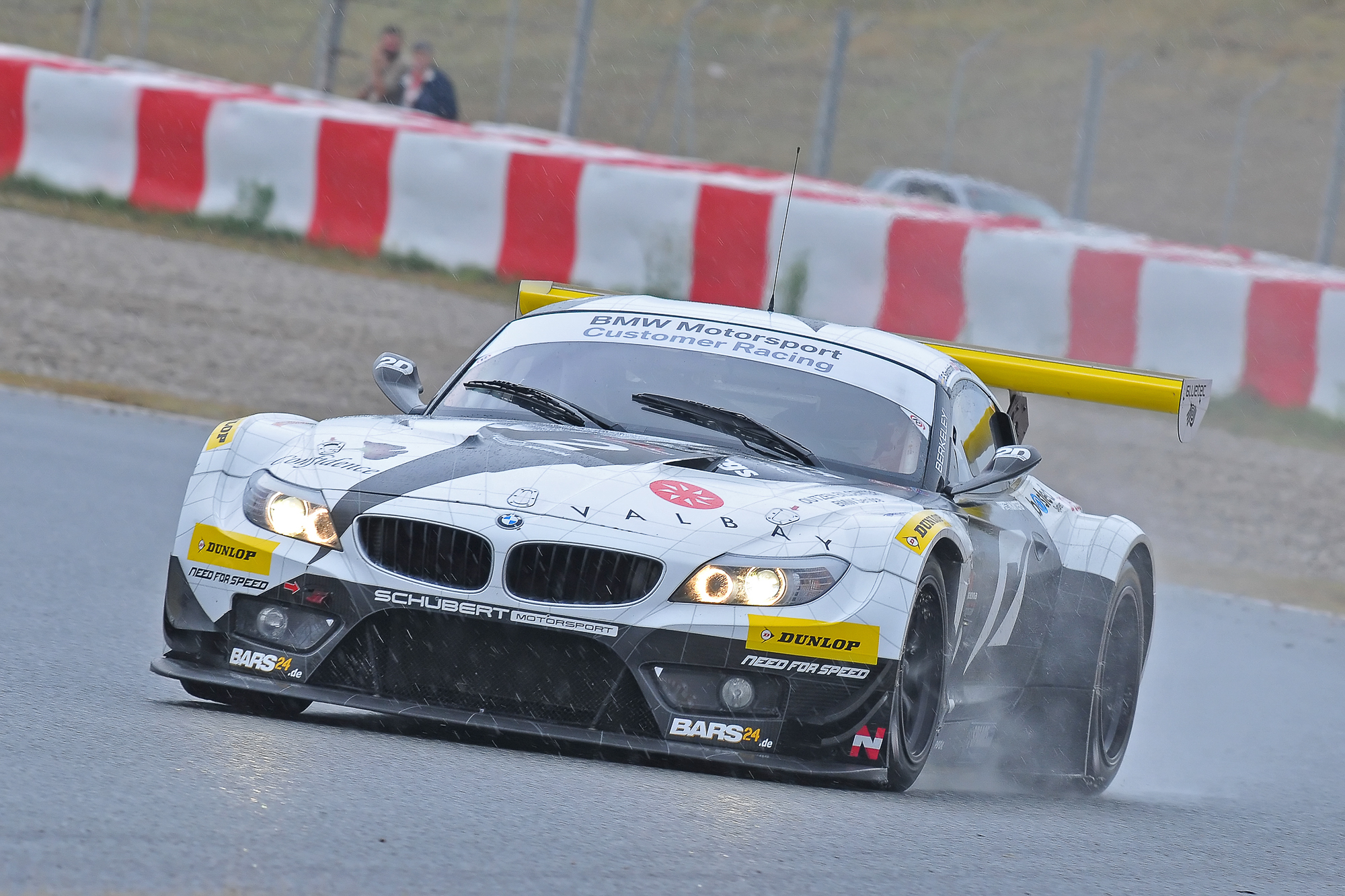
At the front meanwhile, Team Schubert, winner of the 24H DUBAI that January and overall runner-up at that year’s Spa 24 Hours, was the team to beat. 


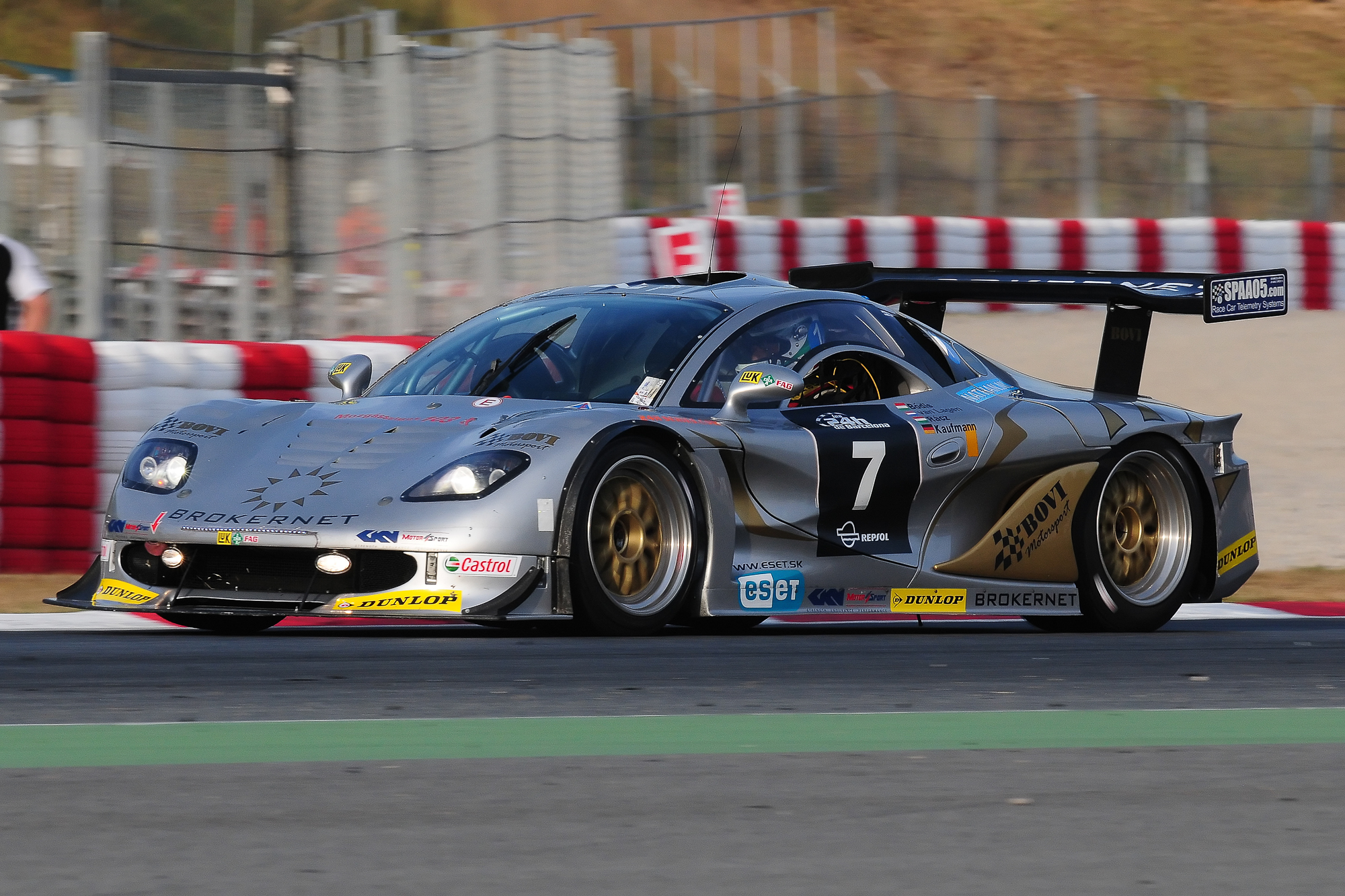
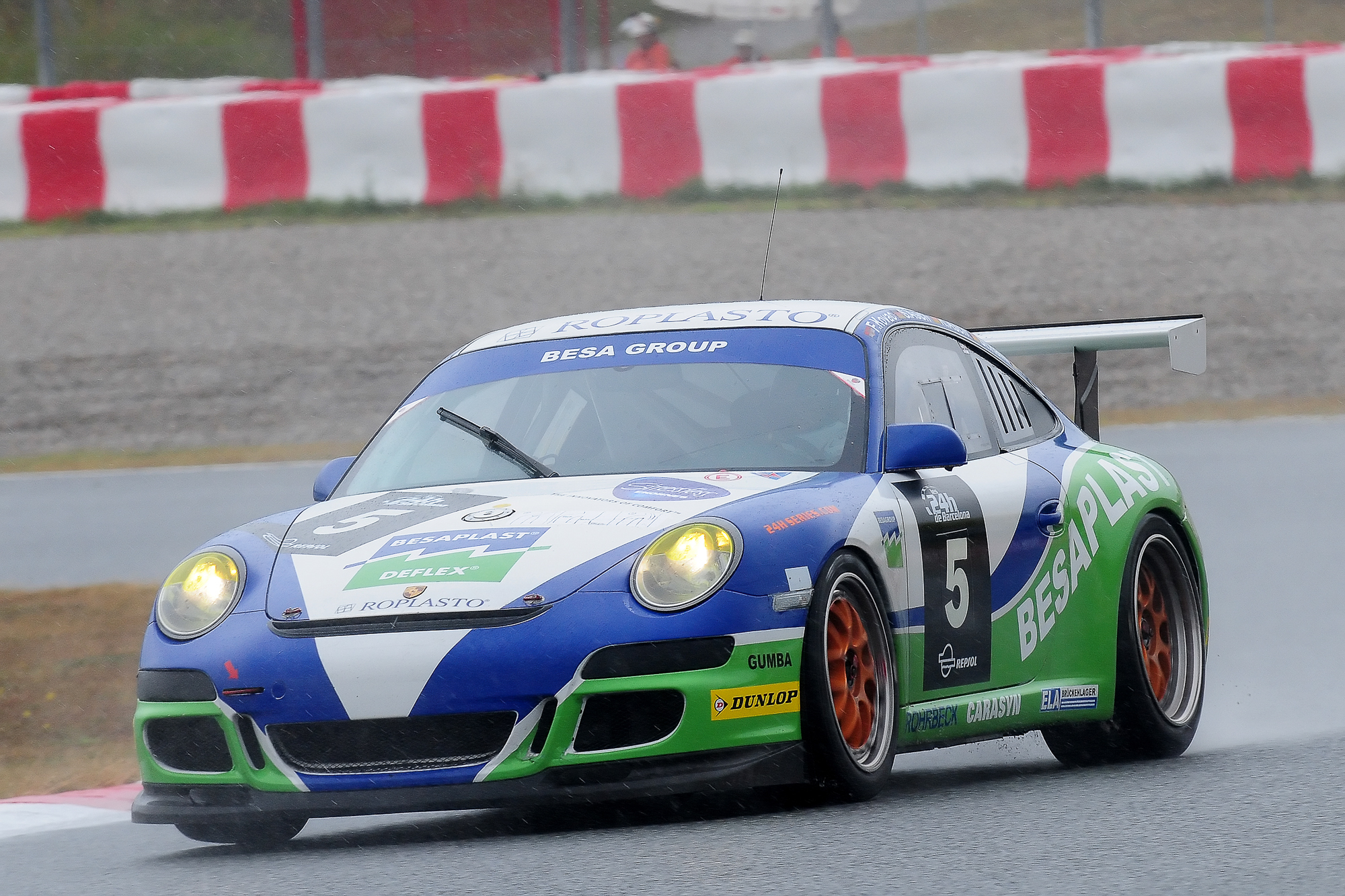
Quite literally. The German team secured pole position by what appeared to be a scant 0.39s on the Saturday (BvV Racing’s weekend got off to a poor start with a heavy accident), though many in the paddock believed the #2 BMW Z4 GT3 was holding two, if not three, seconds in reserve over its 1m 52.082s pole time. Indeed, behind Schubert and fellow front row starter Equipe Verschuur (#10), Bovi Motorsport’s bespoke Brokernet Silver Sting (#7) and the Besaplast Racing Team’s Porsche 997 GT3 Cup – the SP2 and 997 class polesitters, respectively – lined up 3rd and 4th overall, but were still two seconds slower than the pole-sitting BMW.

“Just like that, and despite some pre-race jitters, MotoGP champion Lorenzo was an endurance race winner!”

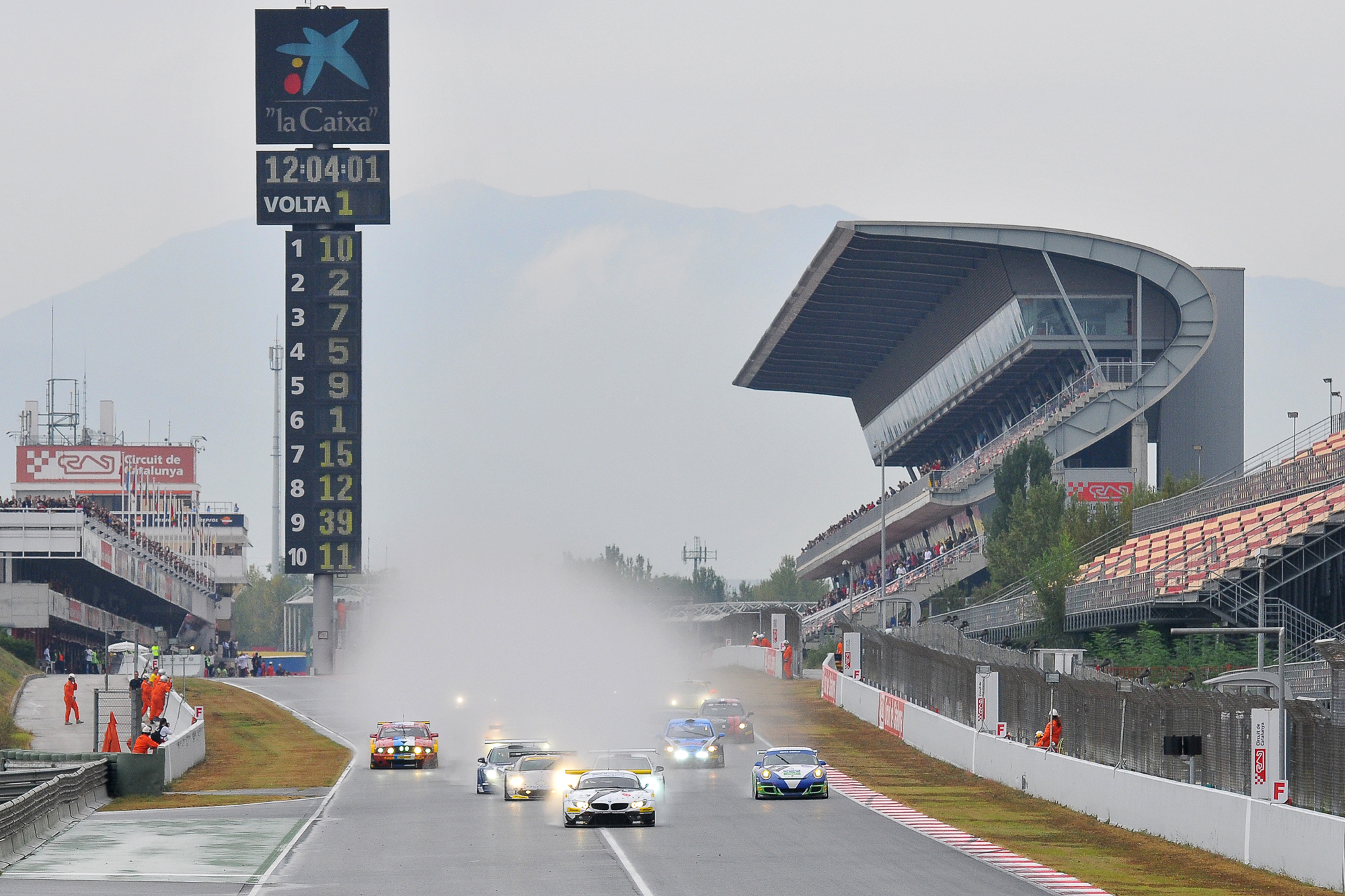
A heavy downpour on race day morning, as well as constant rain during the opening two hours, suggested the revived 24H BARCELONA might still produce a shock result. Certainly Equipe Verschuur’s Duncan Huisman gave it his best shot: on the tail of Schubert Motorsport’s Edward Sandström into turn one, the Dutchman managed to muscle his way past the BMW to briefly take the lead on lap one. 


Huisman’s advantage would not last long, however: by the end of the first tour, Sandström was already back in-front, and after just 76 laps, the #10 Renault Mégane Trophy was out of the race altogether with a blown engine. 


Thereafter, Schubert’s pace seemed unassailable, and by half-distance, the 24H DUBAI winner had already banked a new lap record – Michael Outzen’s 1m 51.876s – and was seven laps clear of the field. A cushion that increased to 21 laps at the chequered flag after a flawless performance by Sandström, Outzen, Peter Posavac, Lars Stugemo, and the Schubert team.

“It’s fantastic that we can add another victory to our list of achievements,” Schubert team manager Stefan Wendl explained, post-race. “Our car was running like clockwork. The only problem was that Michael Outzen drove through the gravel trap during the night when he had to avoid another car that was [stationary] on the track in front of him. After that, we had to remove some gravel from the car, but that was it.


“With this victory, we now have three podium finishes from three races with this car.” – Chassis 1101 also finished 2nd at Spa and 3rd in a warm-up VLN race at the Nordschleife. – “A big compliment also to the drivers, who were driving in this line-up for the first time.”


“It was amazing, perfect,” Sandström added. “All we had to do was drive. Schubert is a very good team and the car we drove worked without a hitch. It's so easy to win!”


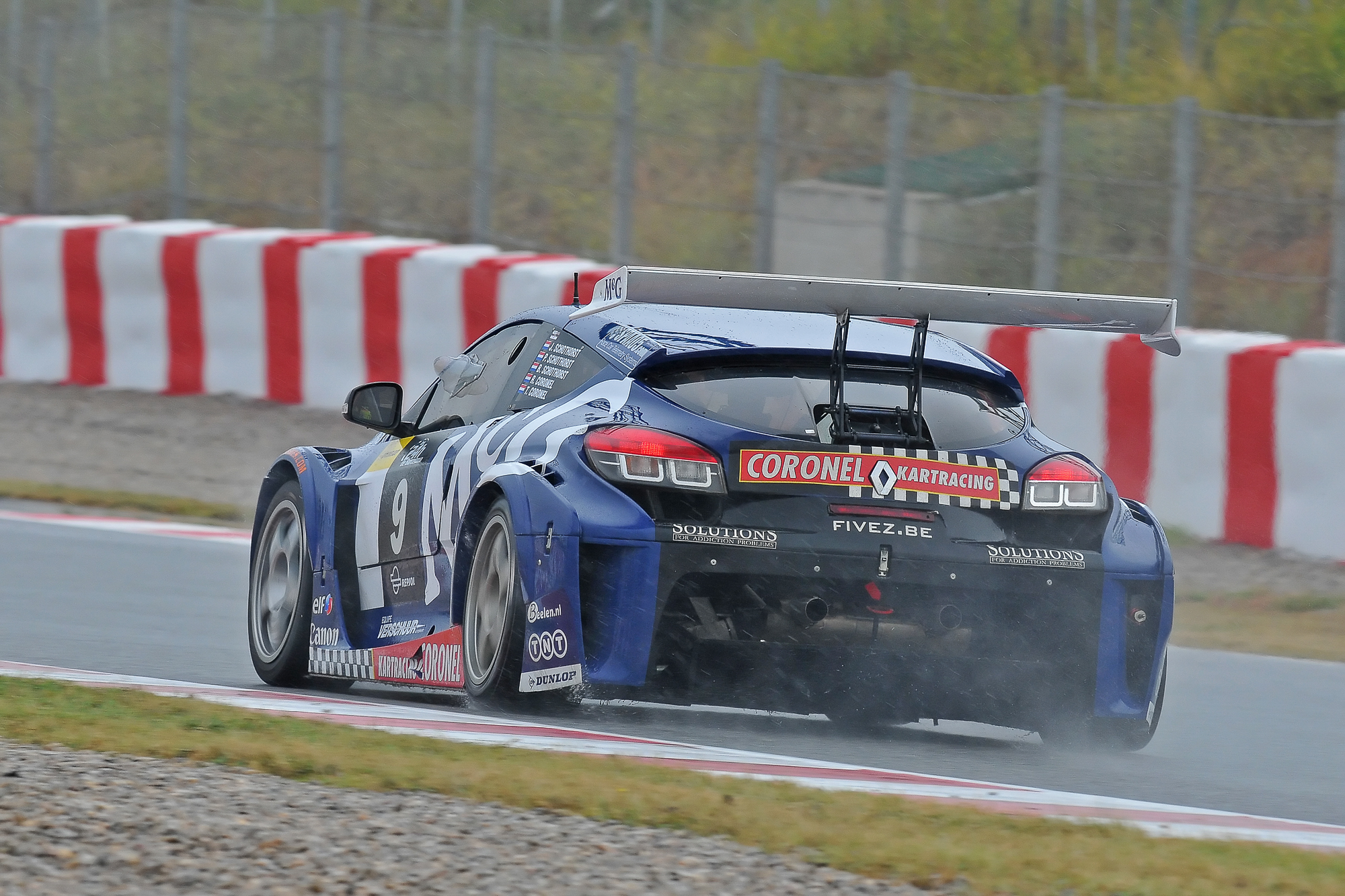
Schubert’s advantage was amplified, admittedly, by a magnificent race-long battle for 2nd that, seemingly, nobody wanted to win. After the #10 Renault’s early exit, the gauntlet was first taken up by the Besaplast Racing Team (#5), though the Porsche 997 ended up losing an hour in the pits with a drivetrain issue. Up next was the Bovi Motorsport Brokernet (#7), but this too was forced into the pits when István Rácz went through the gravel at speed and had to pit for a new front splitter. Plummeted to 50th by the fiddly work, impressive speed during the night meant the Brokernet was back up to 3rd come Sunday morning, now behind the Schubert steamroller and, ironically, Equipe Verschuur’s other Renault Megane Trophy (#9). 


Brutally, ill winds continued to follow the Dutch team, which was forced to pit with only two hours remaining on the Sunday to replace a shift cable in the gearbox. Bas Schothorst, Joeroen and Pieter Schothorst, World Touring Car Championship favourite Tom Coronel, and his brother Raymond nevertheless managed to fight back on to the final rostrum spot behind Bovi Motorsport’s Kaufmann, Rácz, Kalmán Bodis – the mad scientist behind the Porsche flat-six-powered, race-derived sports car – and Jaap Van Lagen.


“This time we had the luck we needed at the end. The repairs threw us back to 3rd place, but our competitor for 2nd also had problems, so we were able to move up to P2 again,” Kaufmann explained, post-race. “We knew beforehand that we could hardly get more than 2nd place against the BMW Z4 GT3, so our team prepared the Silversting optimally for the 24-hour distance and did a great job during the race. We are more than satisfied with the result!”


4th overall and ‘997’ class victory went to the recovering Besaplast Racing and a similarly impressive fightback. A just reward for ’86 DTM champion Roland Asch, his son Sebastian, Franjo Kovác, Martin Tschornia, and Stephanie Halm.


Fittingly, the battle for A3T class victory in Barcelona – and 5th overall – was decided by just under two minutes, as PCR Sport (#39) came out ahead of its ‘sister,’ Team Clairet Sport SEAT León Supercopa Mk.2 (#40), the former having outsprinted the latter in the closing stages despite making more pit stops. Just like that, and despite his pre-race jitters, MotoGP champion Lorenzo was an endurance race winner!


Early class leader – and reigning event winner – Move Racing by SunRed (#1) lost more than hour in the pits after an on-track collision during the first two hours, but the ferocious pace of two-time winner Jordi Gené (’00 and ’01), ’09 winner Ferran Monje, Fernando Monje and Borja Veiga saw the SunRed SEAT storm back to 3rd in-class and 9th overall ahead of Monlau’s #37 SEAT (driven, incidentally, by 15-year-old Jordi Oriola!). 


Across in the ‘A2’ class meanwhile, fellow event winner Cordony Sport only just escaped a late-race heart attack when Laia Sanz inadvertently collided with D1 class leader Recy Racing during the final hour. The Renault’s front left suspension was toast, but Cordony’s cushion over Formula GT (#50) meant the French team could still celebrate A2 class victory from the garage. 


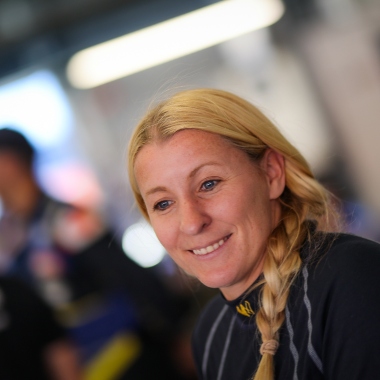
“It was a very intense experience,” Laia Sanz explained, post-race. “I had a great time at times, and a bad time at others! On [Saturday morning], the team gave me the car while we were 1st in A2 and 16th overall, so I had the pressure of not making any mistakes. I also lost my radio and couldn’t communicate with the team, but everything went well and I returned the car without losing any positions. [During the night], my teammates did very well and climbed up to 11th place. We had everything in our favour, so I went out very calmly so as not to make any mistakes. 


“The objective was to reach the finish line, but suddenly a car spun and came straight towards me. I tried to avoid it but I didn’t have time, and it hit me. When I saw the damage and that I couldn’t continue, I had a very bad time because I thought we were out of the race. I felt down, above all for the team, for all the work and effort that everyone had put in. But when I got to the pits, they told me not to worry, that we had won. That was a huge relief… It was a fantastic experience!”


Recy Racing unfortunately was less lucky, and the Dutch team, with its BMW 120d also parked, could do nothing to stop Marcos Racing International (#63) coming through to sneak the D1 win at the line. Another class win in the books for Jim Briody as he approached 24-hour number 90, of an eventual 100.

While Schubert was left celebrating a second win 24-hour for its Z4 GT3 at Barcelona, CREVENTIC and the RACC was similarly praising a job well done. In a crucial nod to the event’s multi-class format, five different manufacturers finished in the top 10 in 2011, compared with just ONE in the top 11 in 2009, as did five different class winners. Interest, both local and international, was up, and talk in the paddock had already turned to the prospect of a second edition in 2012. 


Okay, the GT3 competition had not been quite as tight as anticipated – the only other ‘A6’ competitor, Backdraft Motorsport’s Lamborghini Gallardo LP500, finished 145 laps further back in 41st – and not all the local media had been won over by the regional ’24 Hores de Barcelona’ being reinvented so radically. Keen to ride the momentum though, a second edition was quickly greenlit for 2012. One that would amass an even larger grid, a more compelling fight at the sharp end, and, crucially for CREVENTIC, momentum to build an extended, and soon-to-be FIA-accredited endurance racing calendar. 


Back from the dead, life had been injected not just into the ’24 Hores de Barcelona,’ but the 24H SERIES as well. Win-win.

Check out this article in the 2024 Hankook 24H BARCELONA paddock magazine, available for digital download below.


share this content on: