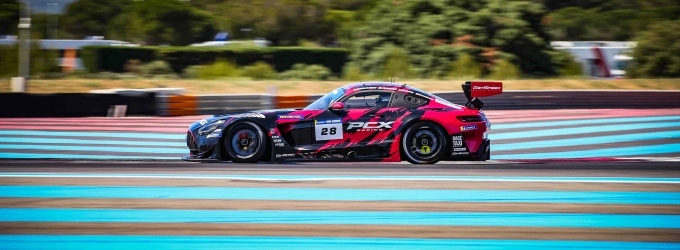
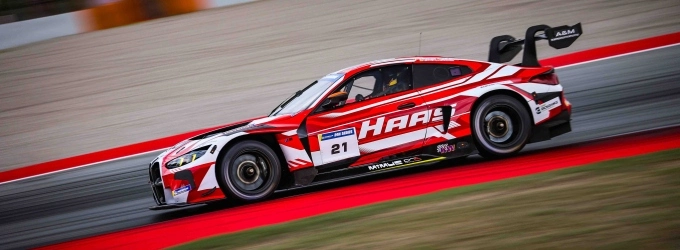
The biggest changes however are at the rear. The ‘swan-neck’ rear wing is gone, replaced by a full-width rear wing built out of the wheel arches, complete with a hearty-amounts-of-downforce-producing gurney flap. In an effort to divert red hot exhaust vapours away from the rear suspension (another bugbear on the 1.0), the dual exhaust pipes have also been relocated.
Below the rear wing is an enormous new diffuser to further improve rear grip, and just behind that, you’ll see a new shark fin, which, together with the ‘coke bottle’ style rear bodywork that tightly cradles the engine bay, will help direct airflow to the rear wing and reduce drag.
Interestingly, despite the sweeping changes to the bodywork, the Vortex has not lost its nimble (well… nimble-ish) stature between generations. The new 2.0 sits 1,996 mm wide, just over 4,500mm long, and, thanks in-part to the more ‘horizontal’ driving position, just under 1,165mm tall. To improve structural rigidity – another priority for Arnaud and Olivier – the new bodyshell is made completely from carbon fibre rather than the less forgiving fiberglass used for the 1.0.
“With the new car, we’ve decided to do everything in carbon, so it will look totally different. We hope, in terms of [robustness and rigidity], the new carbon body will make a big difference too.”
However, while the bodywork design was all completed, in-house, at Hérault, the chassis is another matter. Like its predecessor, the 2.0 is built with a top tubular spaceframe chassis, but unlike the 1.0, new chassis is made completely in carbon, not steel, with structural rigidity, and thus, more downforce through the corners, once again the priority. Understandably, developing all the specific moulds in-house for the carbon was simply not feasible for Vortex.
“We have had two major partners: Auxal near Clermont-Ferrand, and Mygale, near the Magny-Cours circuit. Together, they made special moulds for the carbon chassis and the bodywork based on our designs.
“After the manufacture of the first chassis, we successfully passed validation with the FIA. This was an important step for us, and essential for the future marketing of our cars. Note that the developed crashbox has respected the same manufacturing requirements.”