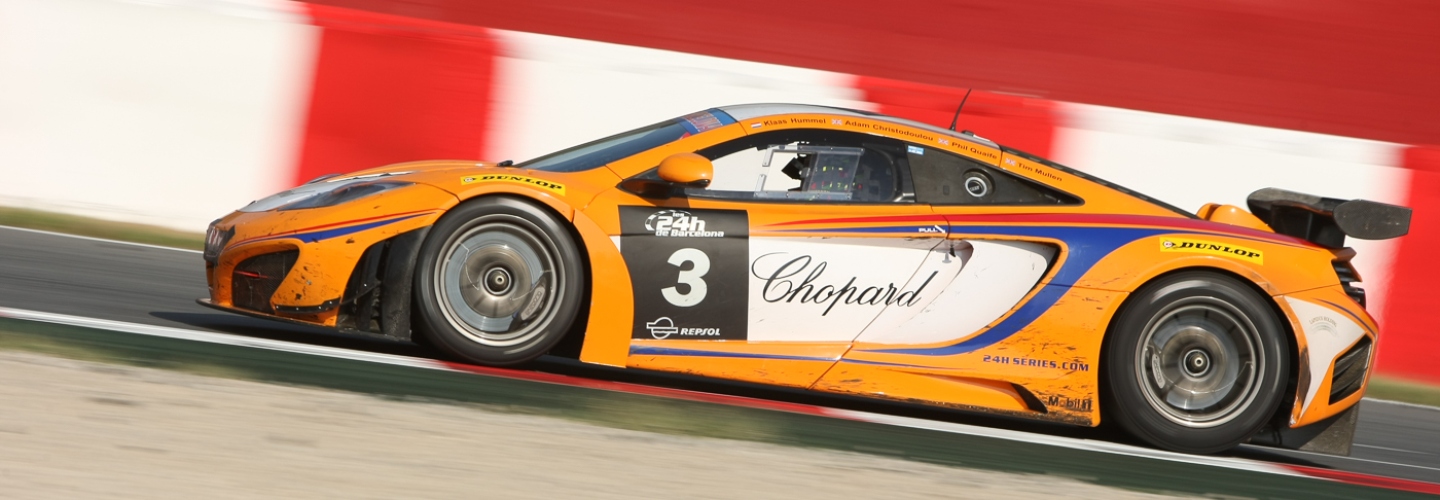
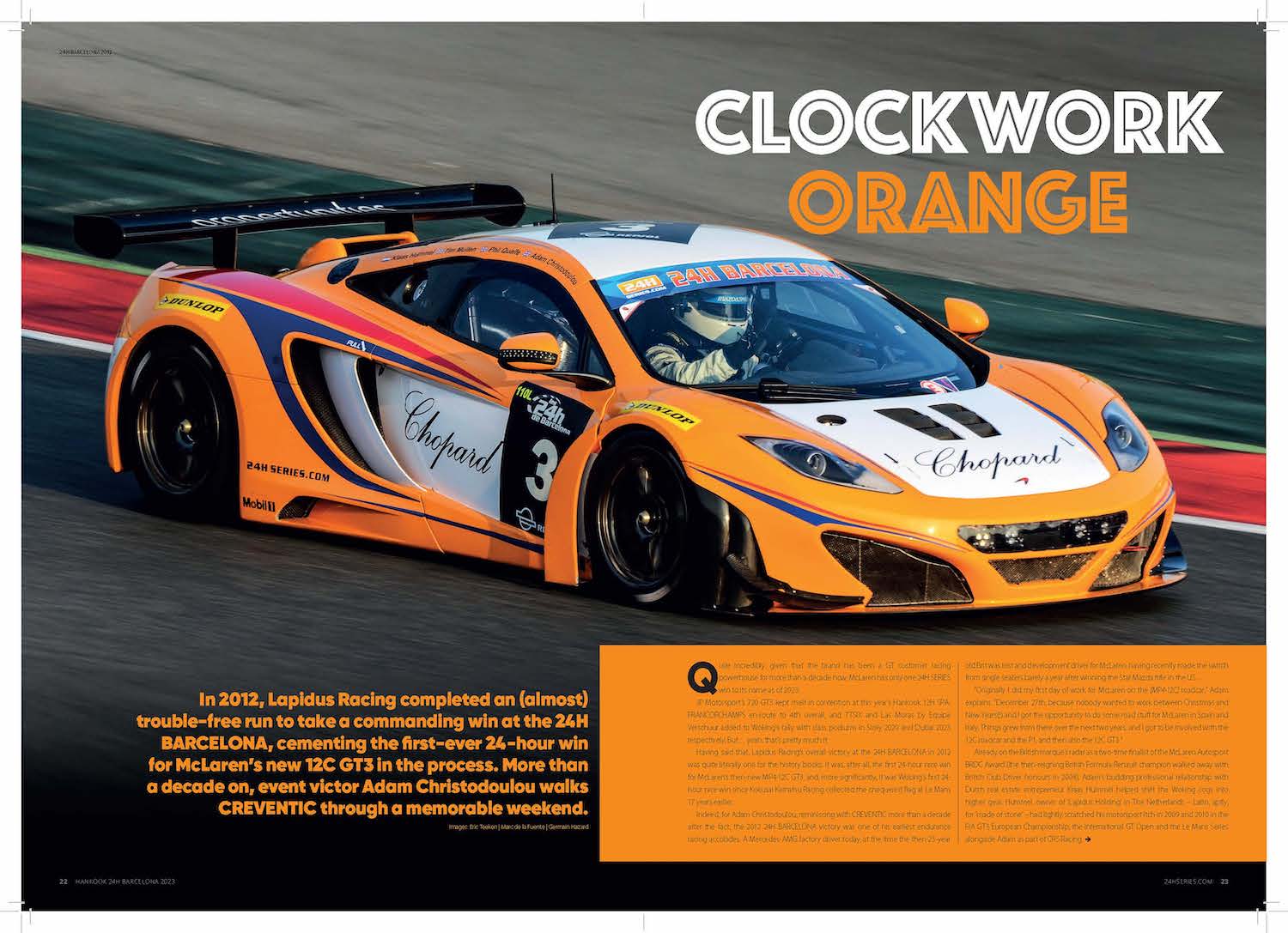
Lapidus’ dominant run to that point, however – there can be no other word for it… – was stymied when Mullen, complaining of intermittent power loss over the radio, brought the McLaren into the garage shortly before midnight…
“Suddenly you go from having a nice lead to coming in to repair a turbocharger. We had started to lose pace, and I guess the big concern was, ‘is it going to get worse?,’ and ‘is it going to do more damage and put more load on the other turbo?’ In the end, that’s why we made the decision to change the turbo.”
Almost 40 minutes were spent replacing the turbocharger, flipping an 11-lap lead into a seven-lap deficit to new outright leader, ARC Bratislava.
“As a team, we decided, ‘let’s get back out there, push things as hard as we can, and try to claw back on to the podium.’ ”
Incredibly, the McLaren, now with Adam at the tiller, returned to the track four laps ahead of the Russian Bears Ferrari (tyre degradation and handling issues had struck hard) and still comfortably in the overall top five. A concept that future Nürburgring 24 Hours winner Adam agrees would be unthinkable in today’s endurance racing landscape…
“Yeah, absolutely! Nowadays, if you lose four or five laps, you can’t get those back, just because everything is so much more advanced and so much more reliable. Nowadays, we have certain software that helps us decide our strategies. There’s still a lot for the engineers to do of course, but back then, everything had to be calculated and worked out on the spot.
“Also, with the cars, it’s incredible now! Realistically, there could be four or five cars finishing on the lead lap! Like the Nürburgring 24 Hours that we won in 2016. We won that by six seconds. After 24 hours! Last year, we finished 2nd at the Nürburgring, and we missed out by, I think, 17 or 18 seconds. So it just shows you how much closer and how much more competitive everything has become now.
“These endurance races aren’t endurance races anymore. They’re 24-hour sprints!”