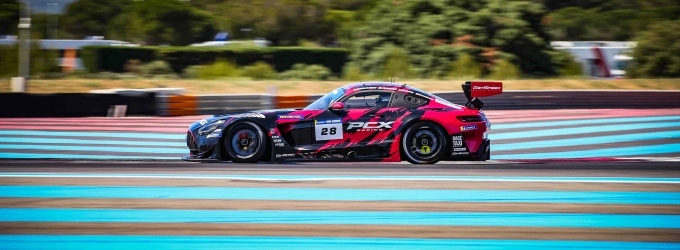
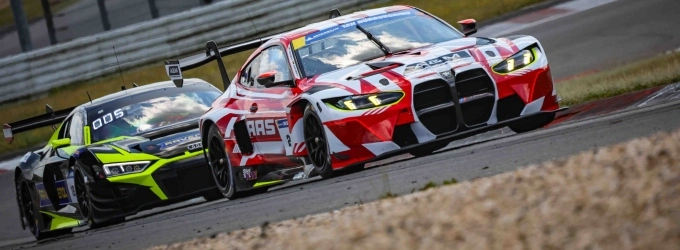
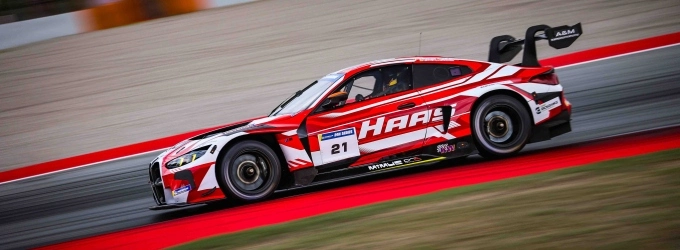
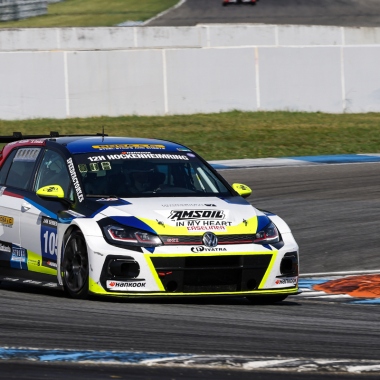
Hockenheim’s current layout is perhaps one of the most challenging circuits on the calendar. Long straights (yes, not in comparison to the old layout, there we go again), heavy braking areas, and very fast constant radius turns which really load the car and driver.
All of which means that Hockenheim calls for a compromise in terms of setup, especially on an aero-dependent car. Do we peel off some downforce to go quicker down the straights, only to then scrabble for grip through the stadium section? Such a setup would have the twofold affect of the tyres sliding around and wearing themselves out quickly, as indeed would the driver, who would have to work even harder hanging on to a wayward car.
But we’ll leave that dilemma to the team engineers, who, as is so often the case in the 24H SERIES, will also have the dilemma of using the Code 60 periods during the race to their advantage.
The Hockenheimring is also totally different to the previous round at Spa-Franchorchamps insofar as the length of lap: a GT3 sportscar should be lapping Hockenheim in around 1 min 40 seconds, while at Spa, they’d on average be looking for a time in the 2 min 20 seconds range. So track position won’t be as great a concern is it was at Spa, where it’s even harder to earn back a lost lap. The circuit has lots of overtaking opportunities, so getting through the traffic for the faster classes shouldn't be too much of an issue. And, in complete contrast to Spa again, there are a lot of tarmac 'run off' areas where mistakes won’t be as damaging.
That’s not to say of course that the goalposts won’t be constantly moving at Hockenheim. It’s one the reasons why we love long distance sportscar racing.